.png)
Manchester to Paris Transfer: Every Travel Option Compared (2026)
 Posted on
September 18, 2026
Posted on
September 18, 2026
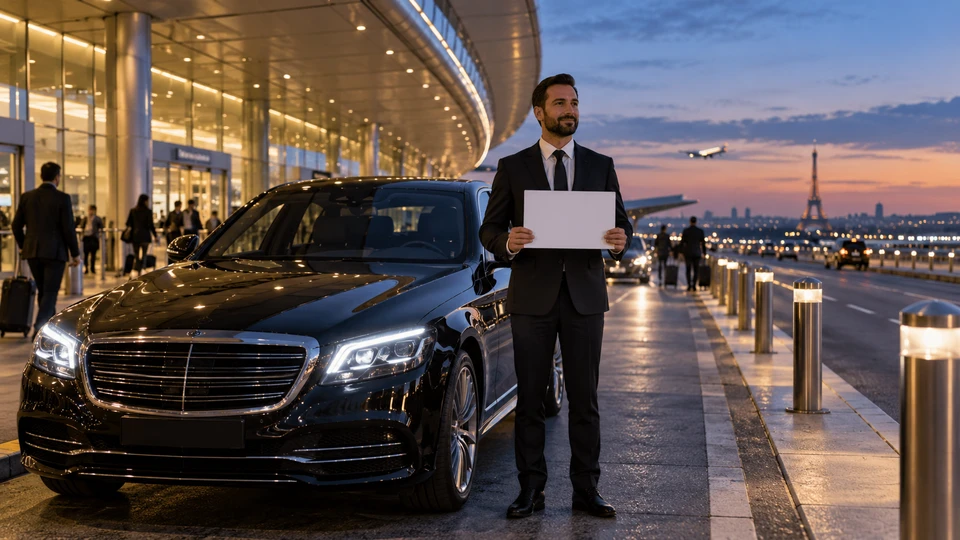
At half past six in the morning, a certain kind of chaos occurs at Manchester Piccadilly — trolley cases collide with the ticket barriers, somebody checks their phone to see which platform has not yet been announced, and a coffee grows cold since there wasn't time to drink it. This is generally the first ten minutes of a journey from Manchester to Paris, no matter which direction you are travelling.
The straight-line distance is about 465 miles, but the actual time it takes to make the journey entirely depends on the route you choose — it could range from ninety minutes by air to a full overnight trip by coach. There is no one correct answer; it all comes down to your budget, how much patience you have for changing trains, and whether you prefer to sleep through the journey or just watch it happen.
If you arrive at Charles de Gaulle via any of those routes, you have to go through another scramble similar to the first — the baggage hall at Terminal 2E filling with rapid French announcements, the luggage belts appearing to take an age when you're tired, and the taxi queue looking shorter than it really is. If you get there by train instead, Gare du Nord gives you a completely different kind of disorder: the platforms are full of commuters, the departure boards continually display cities you've never heard of, and the exits don't clearly lead to anywhere useful.
The guide considers all the practical ways of travelling from Manchester to Paris in 2026 and also looks at what takes place after you have landed or arrived—since getting into Paris and then reaching your actual hotel or apartment are two separate matters, and one of these steps is much more likely to go wrong than most people realise. Whatever method you choose to get from Manchester to Paris, the next part should have its own plan.
Quick Answer: The Best Way from Manchester to Paris
The quickest way to travel from Manchester Airport to Charles de Gaulle is by air, the journey taking about ninety minutes. The overnight FlixBus coach is the most inexpensive option. Although you could travel by train, this would require a change in London.
| Total distance | Fastest way | Cheapest way | Most comfortable |
|---|---|---|---|
| ~465 miles / 750 km | Direct flight to CDG | Overnight coach (FlixBus) | Direct flight to CDG |
The Journey at a Glance
Whether it is going from Manchester to Paris or coming back, you can cross the Channel by air, via the Channel Tunnel, or—less frequently these days—by ferry. For most travellers,, there is now no viable route that involves sea transport only.
For most people, the journey has two stages: first, travelling from Manchester to Paris, then going from whichever station you arrive at—such as Gare du Nord, Charles de Gaulle, Beauvais, or the Bercy Seine coach station—to your hotel or flat. Although the second part of the journey covers a short distance, it can be a lot of trouble if you haven't arranged it.
Easy Prestige Transfer takes care of the second leg, not the journey from Manchester to Paris; consider us the ones waiting for you once you arrive in France, not the ones transporting you by flight or car.
Another point worth mentioning at the start is that France is always one hour ahead of the UK, a fact people tend to underestimate when booking a return flight or calculating how late a Eurostar connection could run.
Getting from Manchester to Paris
Nobody has a direct train service from Manchester to Paris, even though many people assume Eurostar goes to all the major cities in the UK. It doesn't; it only leaves from London, and that fact influences almost every other decision on this section.
Flying direct to Paris
The verdict is that it is by a large margin the fastest one and the one having the least number of moving parts.

Manchester Airport offers direct flights to Paris Charles de Gaulle on most days of the year, with the airlines operating these services being Air France, easyJet and Jet2, and the flight duration is about one and a half hours; Ryanair as well flies direct to Beauvais–Tillé, a smaller airport located well outside the city and one that is suitable for a completely different type of traveller.
- Pros: shortest total travel time, no cross-city connection to manage, frequent daily departures
- Cons: budget carriers charge extra for anything beyond hand luggage, CDG's baggage hall can run slow after a busy arrivals bank, Beauvais is genuinely far from central Paris
If you just want to get there as smoothly as possible, this is generally the case.
Train via London (Eurostar connection)
The verdict is that it's a good option for people who prefer not to fly, provided they budget adequately for the change in London.
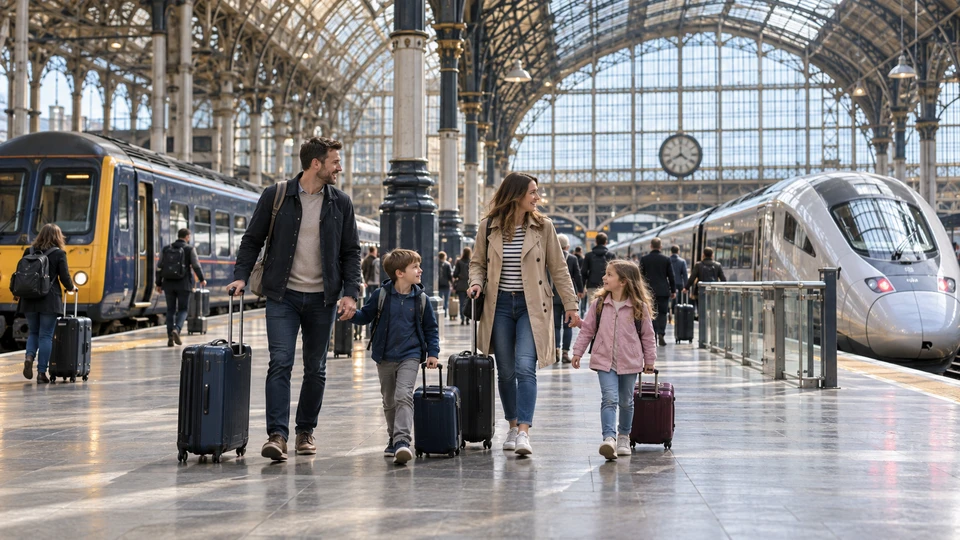
To get there, take a train from Manchester Piccadilly to London Euston—on a good day the journey takes just under two hours—and then go to St Pancras International yourself for the Eurostar to Gare du Nord. Since Euston and St Pancras are close to one another, it's roughly a fifteen-minute walk or a few Underground stops, even though it turns out to be quite difficult when you're doing it with three suitcases and a toddler who has decided this is the moment to stop walking.
Eurostar advises leaving plenty of time before departure for check-in and for UK and French border controls — include this in your schedule rather than treating it as an optional extra.
- Pros: no flying, city-centre to city-centre once you're past London, generous luggage allowance on the Eurostar leg
- Cons: two separate tickets and two changes, the London crossing is the part people underestimate, total time realistically runs six to seven hours door-to-door
Overnight coach (FlixBus)
The verdict is that it's really good value for a single traveller working with a tight budget—just make sure you understand what you're getting into.
FlixBus operates a direct overnight bus service from Manchester's Shudehill Interchange to Paris's Bercy Seine bus station, with no changes, on several nights each week. When the coach arrives in the early evening, the atmosphere at Shudehill is rather quiet — just a small number of backpackers checking their tickets on their phones and the driver loading the cases into the hold one by one. The journey is long, taking somewhere between fourteen and fifteen and a half hours — yet it's on a single ticket, and you end up waking up in Paris rather than having spent a significant part of your holiday budget on the trip.
- Pros: cheapest way to travel by a clear margin, no connections, arrives early enough to start the day
- Cons: long journey, overnight sleep on a coach isn't for everyone, limited departure days compared with flights
Self-drive via Eurotunnel
The conclusion is that it's reasonable if you're taking a car or travelling with a large amount of luggage as a group—but there's no point in doing it merely to save some money.
Drive from Manchester to the Eurotunnel Le Shuttle terminal in Folkestone (about five hours), cross the Channel in around thirty-five minutes, then drive from Calais to Paris on the A26 and A1. When you add up the entire journey, allow nine to ten hours, including the crossing.
- Pros: flexible timing, no luggage limits, useful if you're touring beyond Paris afterwards
- Cons: longest driving day of any option here, fuel and toll costs add up, Paris traffic and parking near your accommodation are their own headache
The Last Stretch: From Your Paris Arrival Point to Your Door
This is the part people often overlook. Reaching CDG or driving into Gare du Nord doesn't mean your journey is over—it just means you've started a second, smaller journey, carrying the same luggage but with none of the original energy.
| Arrival point | Distance/time to central Paris | Recommended option | Notes |
|---|---|---|---|
| Charles de Gaulle (CDG) | ~45–60 min | Private transfer or RER B | RER B is fast but can be crowded and unreliable at peak times |
| Beauvais–Tillé | ~75–90 min | Shuttle bus or private transfer | Genuinely far out; the shuttle bus doesn't run door-to-door |
| Gare du Nord | Already central | Metro, taxi or private transfer | Busy, chaotic on arrival — not the easiest place to get your bearings with bags |
| Bercy Seine (coach) | Already central | Metro or private transfer | Early-morning arrivals mean quiet streets but fewer staffed ticket counters |
For those who want more detail, we have prepared a full local guide on getting from CDG to central Paris—this section is intentionally brief.
No matter which gateway you use, going with a pre-booked private transfer is the way to eliminate the uncertainty — since somebody will be waiting for your flight or train, displaying your name on a name board and then driving you directly to your address, rather than you having to fumble with the ticket machines after a long journey.
Side-by-Side: Total Journey Comparison
| Route combination | Total door-to-door time | Price level | Changes/transfers | Best for |
|---|---|---|---|---|
| Including a private transfer | about 3.5 to 4.5 hours | €€€ | 1 | For people who are short on time and those making business trips |
| Train via London + private transfer | ~6–7 hrs | €€€ | 3 | Rail travellers avoiding flights |
| Self-drive via Eurotunnel | ~9–10 hrs | €€ | 1 crossing | Groups, families with lots of luggage |
| With a night coach and transfer | about 14 to 15 hours and a half | euro | 0 | For budget travellers and students |
Which of the options is right for you? (Match according to the type of traveller)
For families who have young children: taking the flight keeps the trip short and predictable since you can arrange a transfer in advance and thus avoid having to wait for a taxi with a tired toddler.
For business travellers the flight-plus-transfer option was designed with you in mind since it involves only minor changes, a reliable timetable, and having a driver waiting rather than having to negotiate at a taxi rank.
For people who are on a budget, such as solo travellers or students, the overnight coach is a perfectly reasonable option. Although it's slow, it's cheap, and you also avoid paying for a night's accommodation.
As for couples who are avoiding flying, the train route via London works for you as long as you allow enough time when travelling from Euston to St Pancras rather than rushing to get there.
For a group travelling with a lot of luggage, the Eurotunnel route only makes sense if the car is actually useful when you're in France; otherwise, the effort involved is not worth it just for the section from Manchester to Paris.
If you are arriving late and the public transport services have become less frequent, then having a pre-booked pickup will prevent you from ending your long day by having to stand at an empty taxi rank.
For people with reduced mobility, flying and booking in advance a transfer eliminates the most difficult aspects of this journey otherwise — namely the walk from Euston to St-Pancras, the stairs on the RER B, and the overnight seating on the coach. The extra cost is worth the control it provides.
The Case for Booking a Private Transfer with Easy Prestige Transfer
Imagine arriving at CDG Terminal 2E on a Friday evening in August, finding your flight delayed by forty minutes, the children quickly losing their energy, and the RER B out of action due to engineering works — something that occurs more frequently than the schedule indicates. It's in this situation that a pre-arranged transfer proves its value.
We keep an eye on your flight or train, which means that if there's a delay on your side the pickup point won't be empty. The driver will be waiting for you at the designated gateway—whether that's CDG, Beauvais, Gare du Nord or Bercy—with a fixed price that was agreed with you before your journey, as opposed to one that is calculated while you're stuck in Périphérique traffic. Features such as child seats, additional luggage space, and assistance at the curb are the sorts of things that matter most following a long trip, not before it.
👉 Book your transfer upon arrival in Paris with Easy Prestige Transfer — at a fixed price and with the driver waiting for you at your Paris gateway.
When to Travel: Timing, Seasons & Border Queues
Summer is the busiest time of year on each section of the journey – both Manchester Airport and CDG become considerably more crowded between July and August, which in turn causes Eurostar fares to rise. Since the school holidays in the UK and France do not coincide perfectly, a date that is quiet in France may still see a large amount of British half-term traffic at St Pancras or at the Eurotunnel terminal.
The Channel Tunnel and Eurostar are sometimes disrupted by strikes or adverse weather conditions — although such incidents are rare, it's advisable to include some buffer time in your schedule if you're running late. When driving yourself, crossings on weekdays are generally quieter than those on weekends.
What This Journey Really Costs (Including the Costs Nobody Mentions)
When it comes to flying, the price falls into the highest category (€€€) if you take into account the baggage fees on a budget fare, although prices do vary considerably depending on how far in advance you book. The cost of the train is also high when you add the Manchester–London ticket to the Eurostar fare — these are two separate charges that are easy to overlook when preparing a budget. Self-driving comes in at a moderate price (€€), lying between the cost of fuel, the Eurotunnel crossing fee and the French motorway tolls. The coach is always the cheapest (€) of the four options.
The amounts that are often overlooked include the cost of parking or getting to Manchester Airport initially, the shuttle bus fare from Beauvais if you are flying there, and — on the Paris side — the price of a taxi you have to rush out for if you haven't booked it in advance and your arrival is at an inconvenient hour. For a family of four, these little extra expenses can total more than the difference between the two modes as stated in the headline.
There's also a real trade-off worth acknowledging: when both parts of the journey are booked, the train ends up costing roughly the same as flying, which surprises people who think rail must be the more affordable option on this route. It isn't the case here—the fare for the Manchester-to-London section and the Eurostar ticket add up quickly, particularly if you book close to your travel date. When cost is the main consideration, coaches and self-drive options offer the biggest savings, not the train.
Mistakes to Avoid on the Manchester → Paris Journey
- Supposing that there is a direct train from Manchester to Paris, there isn't; all rail journeys have to go via London with a change onto the Eurostar.
– Underestimating the distance between Euston and St Pancras. Although it's short, it's not zero, and if you're carrying a lot of luggage and in a hurry, it's not enjoyable.
– The check-in time for Eurostar should not be set too narrowly. Border control will take into account the actual arrival time, so don't treat the recommended arrival window as just a suggestion.
– If you are booking a self-drive trip without beforehand reserving your Eurotunnel crossing then you will have to use the turn-up-and-go slots, which are more expensive and not guaranteed during the peak season.
– Forgetting the length of time the passport is valid or the current entry requirements. The rules which apply to UK travellers going into the Schengen area do change – make sure you check the most up-to-date requirements before you travel. - When arranging a tight connection or if returning early, ignore the one-hour time difference.
- Not planning Leg 2. Getting to your hotel by landing at CDG or Gare du Nord is different from actually arriving there, so you should arrange that part of the journey beforehand, not afterwards.
FAQ
Does a direct train run from Manchester to Paris?
By no means is there a Eurostar service departing directly from Manchester—you have to take a train to London first and then switch onto the Eurostar for Gare du Nord. The route is well connected, even though it isn't operated by a single train.
Do I need a passport to travel from Manchester to Paris?
A valid passport is necessary regardless of the method of travel and since the entry requirements for UK citizens going to the Schengen area may change, it's a good idea to check the current rules just before you travel.
What is the time taken to travel from Manchester to Paris?
The duration depends on the mode of travel: by plane, it takes between three and a half and four and a half hours door-to-door; by train, between six and seven hours; by car, nine to ten hours; and by overnight coach, fourteen hours or more.
Is it possible for me to arrange a private transfer from Manchester to Paris?
The Paris-area section — that is, the part of the journey covering the route from CDG, Beauvais, Gare du Nord or Bercy to your hotel or apartment — is included in Easy Prestige Transfer, whereas the journey from Manchester to Paris has to be booked on its own as a flight, train or coach ticket.
Is it quicker to fly or take the train from Manchester to Paris?
Flying is quicker overall. The Eurostar leg itself is fast, but the Manchester-to-London train and the cross-city connection add enough time that flying usually wins on speed.
Which Paris airport do Manchester flights land at?
Most direct flights land at Charles de Gaulle, which sits reasonably close to the city. Ryanair's route lands at Beauvais–Tillé, considerably further out, with a shuttle bus needed to reach central Paris.
Can I do a day trip to Paris from Manchester?
It's tight but doable if you fly — an early outbound flight and a late return can give you a genuine day in the city. Any other mode eats too much of the day in transit to make it worthwhile.