.png)
Bristol to Paris Transfer: Every Travel & Transfer Option Compared (2026 Guide)
 Posted on
October 16, 2026
Posted on
October 16, 2026
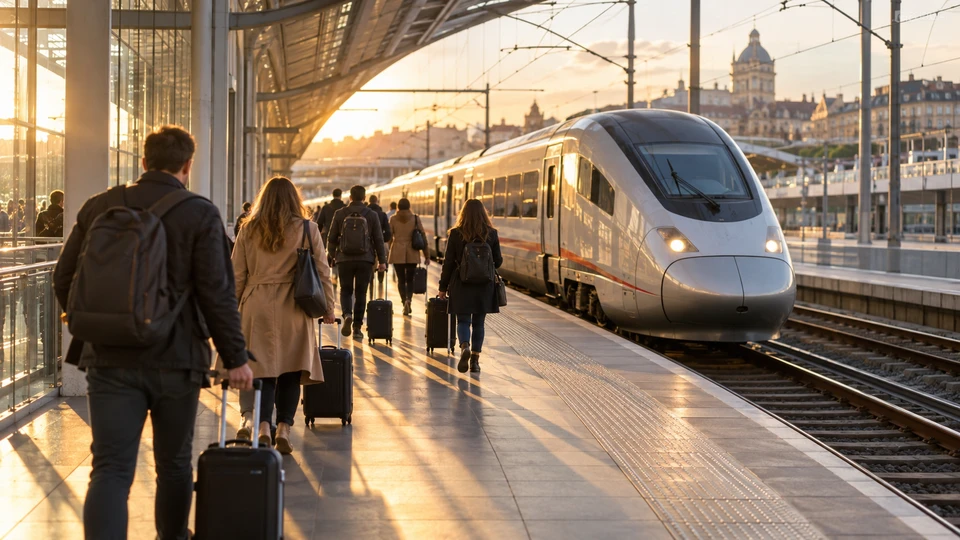
If you are at the concourse of Bristol Temple Meads and stay there early, you will immediately see them — a group of travellers checking their train times for London and calculating a connection between journeys that they have never had to arrange before, since there is no direct train from Bristol to Paris. That is the first point worth noting about this route: it really does involve two separate sections rather than a single direct journey.
If you travel door to door, the journey will take between about five hours (in the case of a direct flight) and well over thirteen (for the cheapest coach option). The most suitable method of travel from Bristol to Paris on any given day depends on what is most important to you—speed, price, or avoiding the need to make a single connection.
The guide is aimed at everybody considering their choices—this includes single travellers on a tight budget, families who are flying with a baby buggy and two suitcases, couples looking to spend a long weekend in Paris, and groups who are planning to drive themselves through the Tunnel. Whatever option you choose, booking your transfer on the Paris side removes one element of uncertainty from arrival day.
Quick Answer: The Best Way from Bristol to Paris
The quickest way of getting from Bristol to Paris is by taking a direct easyJet flight to Charles de Gaulle, with the journey taking about five or six hours when measured door to door. The cheapest option is the direct FlixBus coach, which takes around thirteen hours. Most of the trips end at either CDG or at Gare du Nord, after which a short transfer is required to reach central Paris.
| Total distance | Fastest way | Cheapest way | Most comfortable (fewest changes) | Last-leg into Paris |
|---|---|---|---|---|
| ≈300 miles (480 km) direct; ≈410 miles (660 km) by road via the Tunnel | Direct flight, BRS–CDG | FlixBus direct coach | Direct flight — one hop, no changes once you're airside | Short transfer from CDG, or already central if you land at Gare du Nord |
The Journey at a Glance
The distance from Bristol to Paris is about 300 miles as the crow flies, but the journey doesn't follow a straight line. There is no direct train, no coach that skips London, and—apart from the option involving Beauvais—only one direct flight that is worth considering.
The Channel Tunnel is the point where the crossing takes place, whether you are using air travel, the Eurostar by rail or Eurotunnel Le Shuttle if you are driving your own car; France is one hour ahead of the UK, a fact which is easy to overlook when booking a tight connection.
In practice the journey always involves two stages: travelling from Bristol to one of the Paris transfer points — either CDG or Gare du Nord — and then proceeding from that point into the city. Easy Prestige Transfer provides the service for the second stage, the pickup in the Paris area, but not for the flight, train or coach which takes you across the Channel.
Getting from Bristol to Paris
There are four realistic methods of covering this leg, and the appropriate one will depend on how much time you are willing to give in exchange for a lower price.
Direct Flight: Bristol Airport to Paris CDG
For the majority of travellers this is the flight to book; easyJet offers a direct service from Bristol Airport (BRS) to Paris Charles de Gaulle, with the aircraft landing at Terminal 2D and the journey taking about one hour and twenty minutes.

If you add security, boarding, and the transfer into central Paris upon arrival, the actual door-to-door time will be about five to six hours. Since there is no direct route from Bristol to Orly, any route suggested by a search engine or comparison website will require a connection.
The price is €€, with the amount increasing noticeably the closer to departure day or during French school holidays, and cabin bags are provided free of charge while luggage for the handhold has to be paid for, a point that often catches people out when travelling with their families.
Pros: fastest realistic option. Frequent daily departures. No cross-London hassle.
Drawbacks include having to leave early if you are based anywhere outside of Bristol, the cost of baggage on budget airlines increases quickly, and weather-related delays affect short-haul flights most.
To be honest, if it's more important to get there quickly than to enjoy the journey, then this is the one you should choose.
Train from Bristol to Paris via Eurostar
There is no direct train service from Bristol to Paris, and any website or application which suggests there is doesn't give the full picture. The actual arrangement is a rail journey consisting of a trip from Bristol Temple Meads to London Paddington, a transfer in London, and then a Eurostar train from St Pancras to Gare du Nord.
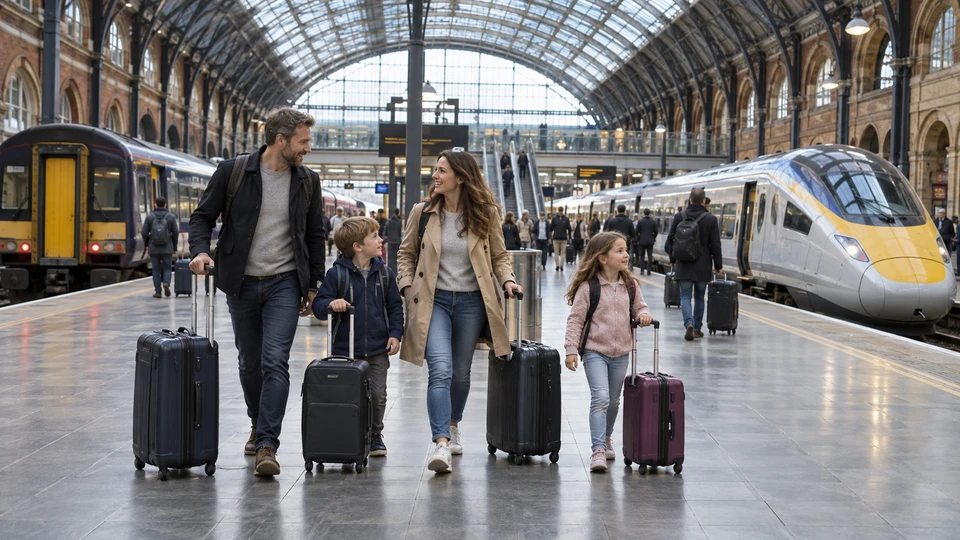
The journey from Bristol to London on Great Western Railway takes about ninety minutes. If you want to get across London by taking the Underground or by taxi, this will add twenty to forty minutes, depending on how patient you are and the amount of luggage you have. Eurostar itself takes around two hours and fifteen minutes to travel from Gare du Nord to St Pancras when it is running at its fastest speed.
Since the UK is not a member of Schengen, at St Pancras before you board your passport — together with the EES fingerprint and photo check which is now in operation at UK–France border points — is subjected to inspection, not upon your arrival. This means that you get off the train at Gare du Nord and then just walk out, without having to wait in any queue on the French side.
Eurostar offers a really generous luggage allowance—two bags per person, each up to 85 cm in size, with no weight limit, a feature that is important when travelling with children. Although tickets for the journey from Bristol to Paris, purchased separately as GWR and Eurostar fares well in advance, can be as cheap as or cheaper than flying, walk-up Eurostar fares increase rapidly.
Pros: It is located at the central station and has generous luggage policies, along with the absence of airport-style security procedures.
Drawbacks include the need for three separate legs to co-ordinate, the change of train in London being the complicated part, and the total journey time exceeding that of the flight when you add it all up.
Bus from Bristol to Paris
Should price be the factor that determines this for you, then the coach company wins. Both FlixBus and National Express offer services departing from Bristol Bus & Coach Station and going via London, using the Eurotunnel shuttle to cross the Channel, and arriving in Paris at Quai de Bercy. The total journey time ranges from about thirteen to fourteen and a half hours, typically involving one change in London.
FlixBus also operates a more direct coach service to Disneyland Paris a couple of times each day, so it's important to note that if 'Paris' in your search refers to the resort not the city centre.
The prices are the lowest by a large amount, especially when you book a few weeks in advance. The luggage allowances are reasonable, with one or two bags generally being included, although it's worth taking two minutes to check the particular operator's policy before you travel.
Pros: It is the cheapest option for this route, the coaches are genuinely comfortable with modern facilities such as power sockets, Wi-Fi, and reclining seats, and there is no need to rush to the airport in the early morning.
Cons: it is by far the longest journey, since overnight trips require you to sleep in an upright position and offer little flexibility if plans change.
For a person travelling alone who doesn't have any schedule to stick to and has a fixed budget, taking the coach is by no means a bad idea—in fact, it's the only option on this list where the idea of "slow" doesn't imply "worse".
Self-Drive via the Eurotunnel
It makes sense to drive when you have a car containing a number of people or when your boot is full of luggage, but it does not make so much sense if you're travelling by yourself. Starting in Bristol the route goes up to the M4/M25, continues on the M20 to Folkestone, transfers to the Eurotunnel Le Shuttle (which takes about 35 minutes by car train), and then proceeds down the A16 and A1 towards Paris.
The total time required is about eight hours' driving, covering a distance of roughly 410 miles, and motorway tolls are charged in France from Calais onwards; it is advisable to book your Shuttle place in advance, particularly during the summer or near French school holidays, rather than turning up and hoping.
Advantages include visiting destinations by car yourself, avoiding the need to transfer luggage between stations, and being a cost-efficient option when the cost is shared among three or four people.
Drawbacks include having a very long day driving, the costs of tolls and fuel piling up, and parking once you're in Paris becoming yet another headache.
The Last Stretch: From CDG or Gare du Nord to Paris
How pleasant or otherwise the final part seems entirely depends on the gateway at which you arrive.
| Arrival point | Distance/time to central Paris | Recommended option | Notes |
|---|---|---|---|
| CDG Terminal 2D | ≈25 km, 45–70 minutes depending on traffic | Private transfer or RER B | RER B is fast but can get crowded, and occasional disruptions are common enough to plan around |
| Gare du Nord | You're already in the city | Taxi, Métro, or a short walk | Central Paris's 10th arrondissement, well connected by Métro and RER, though the station concourse itself gets chaotic with luggage at peak times |
| Paris Bercy (coach arrival) | ≈15–20 minutes | Taxi or Métro line 14 | Eastern edge of the city, straightforward onward connections |
If you want the full details about getting from CDG into the city, our CDG to Paris transfer guide goes into it far more depth than is possible here. In short, once you've arrived by plane, a driver who is already waiting for you avoids the need to queue up for the RER B with two suitcases and a jet-lagged child.
Side-by-Side: Total Journey Comparison
| Route combination | Total door-to-door time | Price level | Changes | Best for |
|---|---|---|---|---|
| Flight + private transfer | ≈5–6 hours | €€–€€€ | 1 (airport to city) | Speed, families, minimal hassle |
| By Eurostar through London and then walking or taking a taxi | about 5.5 to 6.5 hours | €€ | 2 trains (Bristol to London, London to Paris) | Comfortable and with a generous luggage allowance |
| Direct coach | about 13 to 14.5 hours | € | 1 (London) | Cheap travel, no rush |
| Self-drive via Eurotunnel | ≈8 hours driving + city arrival | €€–€€€ per group | 0 (own car) | Groups, families, flexibility |
Which of the options is right for you? (Match according to traveler type)
For families travelling with small children the direct flight will keep the journey short, but it's advisable to arrange a private transfer for the CDG section so that no one has to push a buggy through the RER B with a toddler in the middle of a meltdown.
The coach is truly satisfactory if you're travelling alone on a strict budget; just take a phone charger, some reading material, and realise that thirteen hours will give you the cheapest rate on this route.
A long weekend trip — the Eurostar service from London station to London station is suitable for this kind of journey since the trip itself seems like it belongs to the holiday rather than being something that hinders it.
When you take a group of three or four people, you can split the cost of the fuel, the tolls, and the Shuttle fare among them, which usually makes this the most cost-effective choice, and upon arrival you will have your own car in Paris.
For business travellers who want as few changes as possible the best option is a direct flight since it involves a single straightforward journey, has a reliable schedule, and has a pre-booked transfer waiting at CDG rather than requiring them to negotiate at a taxi rank.
For passengers who arrive late—whether it's the final flight or the last Eurostar of the day—a pre-arranged pickup at your Paris airport is more important on this section than on any other part of the journey. The taxi queues disappear quickly after 10 p.m.
The Case for Booking a Private Transfer with Easy Prestige Transfer
Envision a family taking the first easyJet flight out of Bristol, arriving at CDG Terminal 2D just after 9 am, with two children, a pushchair, and three suitcases. Chosing the RER B option means having to drag all of that down the escalators and go through the ticket barriers before they've even fully woken up.
Having booked a driver in advance completely changes the situation. Since we monitor your flight, if your departure from Bristol is delayed then no one will have to wait at an empty arrivals gate. The driver will be there with a name plate and will be ready to assist you with your luggage, since a fixed price had been agreed upon before you even left home—there will be no unexpected charges and there will be no language difficulties at the taxi rank.
Child seats can be obtained on request, regardless of whether you have arrived by plane or have got off the Eurostar at Gare du Nord—though the service is most profitable at CDG arrivals, since the airport is a long distance from the city centre.
👉 Book your transfer upon arrival in Paris with Easy Prestige Transfer at a fixed price, with the driver waiting for you at CDG Terminal 2D.
When to Travel: Timing, Seasons & Border Queues
Around the time of the UK half-term and when it overlaps with French school holidays—especially from late July into August and during the Christmas period—both Eurostar and flights become much busier, so if you're travelling then you should book both parts of your journey well in advance.
The disruption to the Channel Tunnel—whether due to weather, strikes, or technical problems—affects Eurostar and Eurotunnel Le Shuttle differently, so check the current status in the morning before you travel rather than assuming yesterday's timetable still applies.
A particular feature of this route relating to the seasons is that both the Halloween season at Disneyland Paris (which takes place in October) and the period leading up to Christmas cause demand for the FlixBus route to the resort to rise sharply, so it's important to be aware of this if the direct coach is one of the options you're considering.
What This Journey Really Costs (Including the Costs Nobody Mentions)
To put it simply, the coach costs €, the combined fare for the flight and Eurostar is about €€, and the price for self-driving is somewhere between €€ and €€€ depending on how many people are sharing the cost.
The expenses which are not mentioned in the headline prices are the ones that surprise people: for example, the cost of parking or that of taking the Bristol Airport Flyer bus to get to the airport, the baggage handling charges on a budget flight, the Eurostar fares at peak times which can overnight double, and the motorway tolls in France if you're driving.
For an average couple or small family the true order of costs is as follows – coach is the cheapest, flight and train are about the same once the extra charges are taken into account, and the best value for self-driving only applies when the number of people is three or more.
Mistakes to Avoid on the Bristol → Paris Journey
– It should be assumed that there is a direct train, but there isn't; all the rail options from Bristol require a change onto the Eurostar in London.
- We are cutting it very close at St Pancras. Since the EES checks are now online, if you arrive exactly at the previous thirty-minute check-in limit there will be no buffer time if the queue is long.
- Underestimating the time required for the journey from CDG to the city. A tight connection or a dinner reservation can be jeopardized if you assume that the RER B will run on time.
– Forgetting to verify the current entry requirements. Double-check passport validity and the EU's ETIAS authorisation close to your travel date, since the details have been changing throughout 2026. - If you are booking a self-drive without reserving a place in the Eurotunnel, you will have to wait for a long time during the peak season, even if there is still space available.
- If you still think in UK time you will easily make a mistake about a tight onward connection in Paris because of the one-hour time difference.
- If Bristol Airport serves Orly, it doesn't; CDG is the only direct flight, and this is important should your hotel be south of the city.
FAQ
Does a direct train run from Bristol to Paris?
Not at all; each rail journey from Bristol to Paris requires a change of trains in London, involving a transfer from Paddington to St Pancras and then continuing on the Eurostar to Gare du Nord.
Does a non-stop flight operate between Bristol and Paris?
Yes, easyJet provides a direct flight from Bristol Airport to Paris Charles de Gaulle with an aerial travel time of about one hour and twenty minutes; at present, there is no direct flight to Orly.
Is a passport necessary if I am travelling from Bristol to Paris?
Yes, since the UK is not part of the Schengen Area, a valid passport is needed for all modes of transport and the entry requirements have been changing throughout 2026, so it's advisable to check the current rules just before you travel.
What is the time taken to travel from Bristol to Paris?
The duration entirely depends on the mode of travel: by direct flight it is about five to six hours, similar in the case of the Eurostar via London, roughly eight hours if you drive using the Eurotunnel, or thirteen to fourteen and a half hours by coach.
Is it possible for me to arrange a private transfer from Bristol to Paris?
The Paris-area section is covered by Easy Prestige Transfer – that is, the part involving your pickup from either CDG or Gare du Nord within the city – not the flight, train, or coach which takes you across the Channel.
Can I take a day trip to Paris from Bristol?
In technical terms, yes, you could leave early and return late, but the day would still be extremely long and would have very little buffer time if anything went wrong. Most travellers think it makes much more sense to stay over night.
How can one get from Bristol to Paris at the lowest cost?
The direct FlixBus bus, which takes about thirteen hours and involves one change in London, is always the cheapest option for this route.